
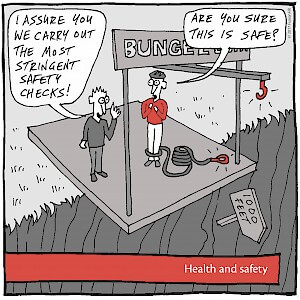
Employers have a duty of care to employees, requiring them as far as reasonably practicable, to secure the health safety and welfare of their employees. This still applies and is even more prevalent during the pandemic and should incorporate the risk of COVID-19.
An employer should be able to prove they have applied effective risk management and reduced the potential risk of workplace hazards.
During this time the Government and the Health and Safety Executive are advising that considerations should revolve around three key areas, Workplace Assessments, Workforce Assessments and Individual Assessments.
Workplace assessment
A workplace assessment should look at the potential exposure to COVID-19. It should look at control measures that can be put in place such as hygiene facilities, handwashing, cleaning, use of PPE, social distancing. The HSE guidance also mentions considering:
- Staggering start and finish times so people can keep to the 2 m social distancing rules by not using entry/exit points at the same time
- Providing handwashing facilities (running water, soap and paper towels) at entry/exit points. If this is not possible, provide hand sanitizer.
- Arranging work areas to keep people 2 m apart; mark areas using floor paint
- Providing signage to remind people to keep a 2 m distance
- Where 2m cannot be achieved, you should think about assigning one person per work area.
- Using signs and posters to increase awareness
- Setting clear guidance for the cleaning of toilets, showers and changing facilities
- Setting clear guidance on how to handle goods, merchandise and materials and when cleaning procedures need to be followed
- How and how often common areas and objects will be cleaned
- Whether any point of access needs to change due to the way it is accessed, such as handles, keypads etc.
- Provide hand drying facilities – either paper towels or electrical dryers. Empty bins frequently
- How workers could be grouped so they encounter less employees.
- Leave doors open that can be left open (taking fire safety into consideration) to reduce the need for people to touch door handles.
As always with any risk assessment the following should be followed:
- Identify hazards
- Assess the risks
- Control the risks
- Record your findings
- Review the controls
You can access more information on the HSE website or on these links;
- https://www.hse.gov.uk/news/assets/docs/working-safely-guide.pdf
- https://www.hse.gov.uk/news/assets/docs/talking-with-your-workers.pdf
You may also benefit from joining our free webinar on 11th June on Health and Safety in the workplace during the pandemic. Click here for more information.
Workforce assessment
You need to assess your workforce to identify employees with potentially increased vulnerability.
In normal circumstances, it is not appropriate for managers to seek health information from employees. However, during this period it is not unreasonable to ask sensitively about any underlying conditions, as it is in the interest of the employee. You are trying to keep them safe.
According to the guidance provided, you should note on your assessment any employee who falls into the following categories and investigate further with individual assessments noted below:
- Specific long-term health conditions
- Older age
- Pregnancy
Evidence also suggests that ethnicity of a BAME background may also be associated with increased vulnerability, so this is also worth noting.
Once identified, risk assessments should be carried out with individuals, providing a way of documenting and acting on concerns, which you must acknowledge and discuss.
Individual Assessments
For assessments with individuals there are currently six factors that need to be considered. They are:
- Age: Those aged over 70 have already been identified clinically vulnerable
- Sex
- Clinically vulnerable people: Those with underlying health conditions or comorbidities (one or more additional conditions may also include behavioural or mental disorders)
- Ethnicity: Those of BAME appear to be at increased risks, particularly aged above 55 or have comorbidities
- Pregnancy in particular those who are over 28 weeks or have underlying health.
These may change over time as more information is gathered about the virus. For the extremely vulnerable, the government guidance about who is included and the actions they should therefore take are mainly quite clear but when it comes to the broad range of conditions in the moderate risk category, the guidance is not so clear and it is here where you may need some help.
We have experienced Occupational Health Physicians who can provide you with an assessment of risk (in their medical opinion), for anyone who falls within the six categories listed above. It could help you to establish which category people fall into and also who can return to the work environment with extra protective measures, known as social distancing plus. To find out more about Vulnerable People Risk Assessments call 01924 827869 or contact us.
We are trying to keep information up-to-date but as guidance is constantly changing, please check our latest blogs and also refer to our COVID FAQ questions which you can access here.
Resources:
https://www.hse.gov.uk/news/assets/docs/working-safely-guide